What Remains Part 8: The Weight of Stone
I carve away at the stone, and it does not seem to get lighter. The weight of what I’m doing seems to increase as the days get shorter.
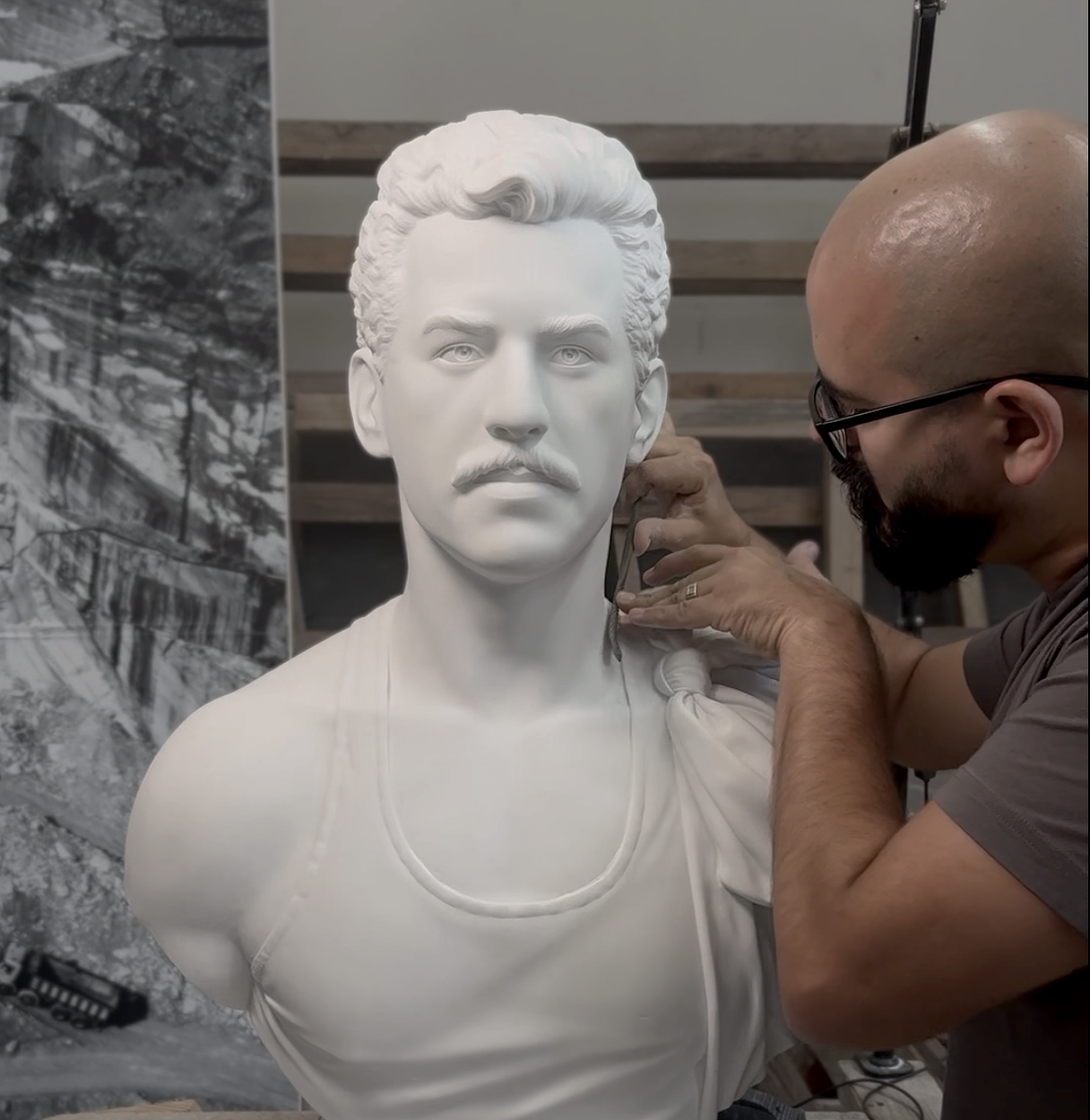
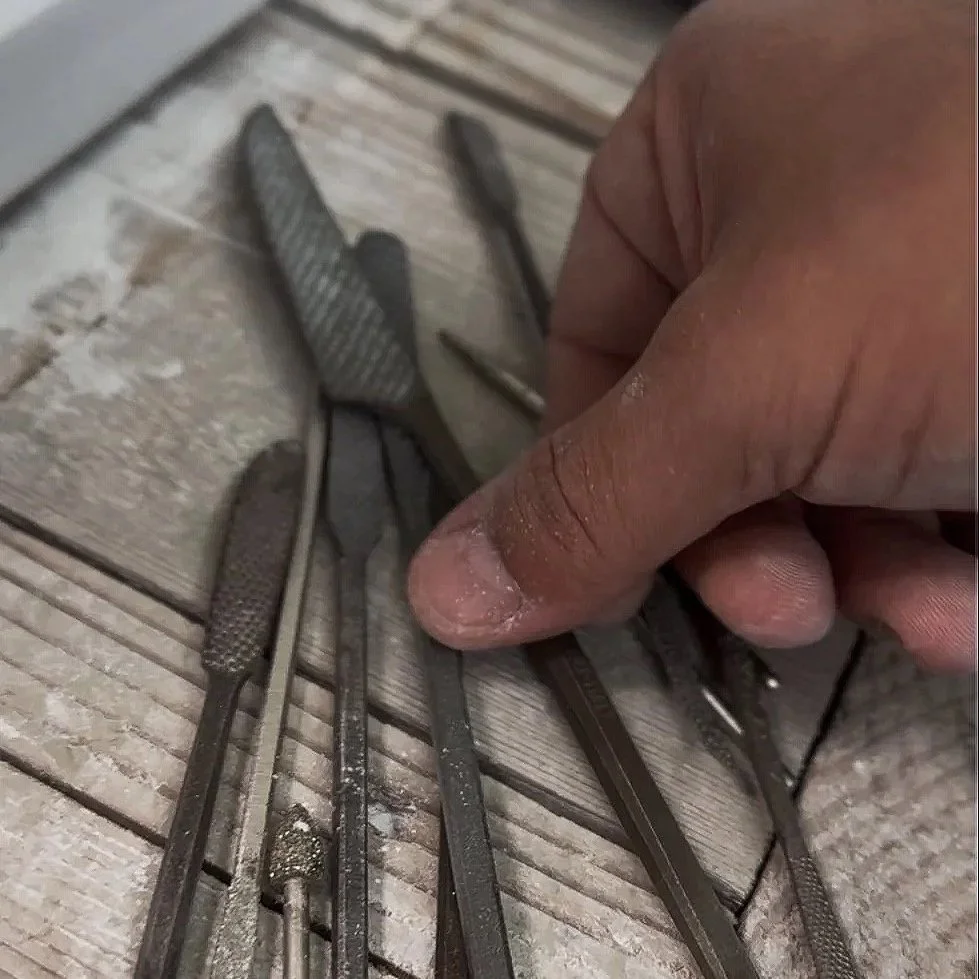
As I write these words, this 19th of June, 2025, the work on the bust is nearly complete – at least as far as I am able to take it in the short time I’ve worked on it this past month. In a few days, my mother and father will join me in Italy. They don’t yet know about the sculpture – about the likeness of Andrés, in marble, waiting in the studio like a secret held too long. They think they’re here to visit while I just so happen to be working on the still unfinished Pieta from the year prior. What they also don’t know is that we’ll soon carry it together, up a mountain, to a cathedral that watches over the historic town of Barga where it will be displayed in the courtyard overlooking the mountainous Tuscan countryside. I scrape, rasp, and polish the surface; each fold of cloth casting a unique shadow each chasing their own small sliver of excellence. Excellence that has always seemed just on the horizon for me, yet always recedes when I get close.
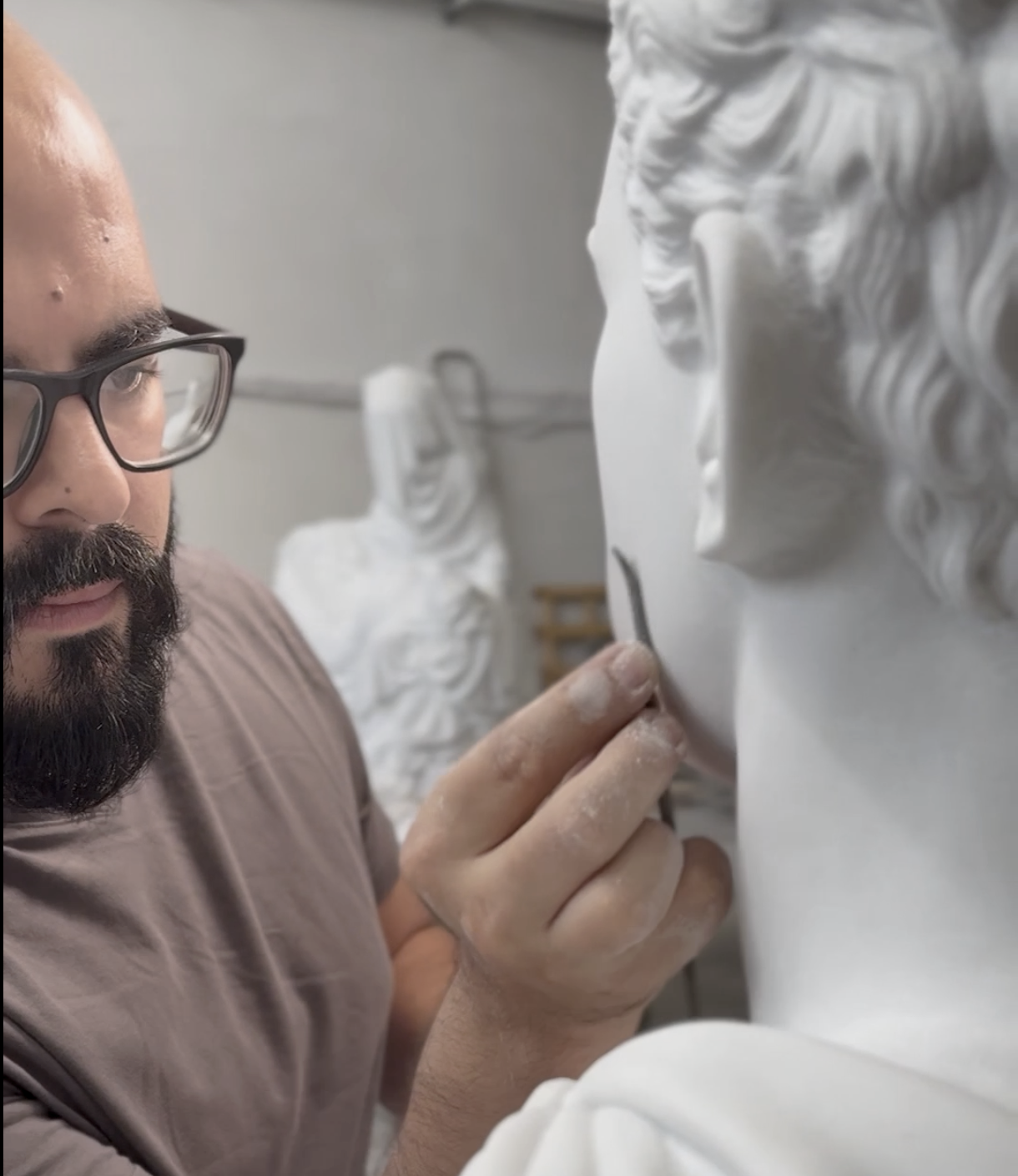
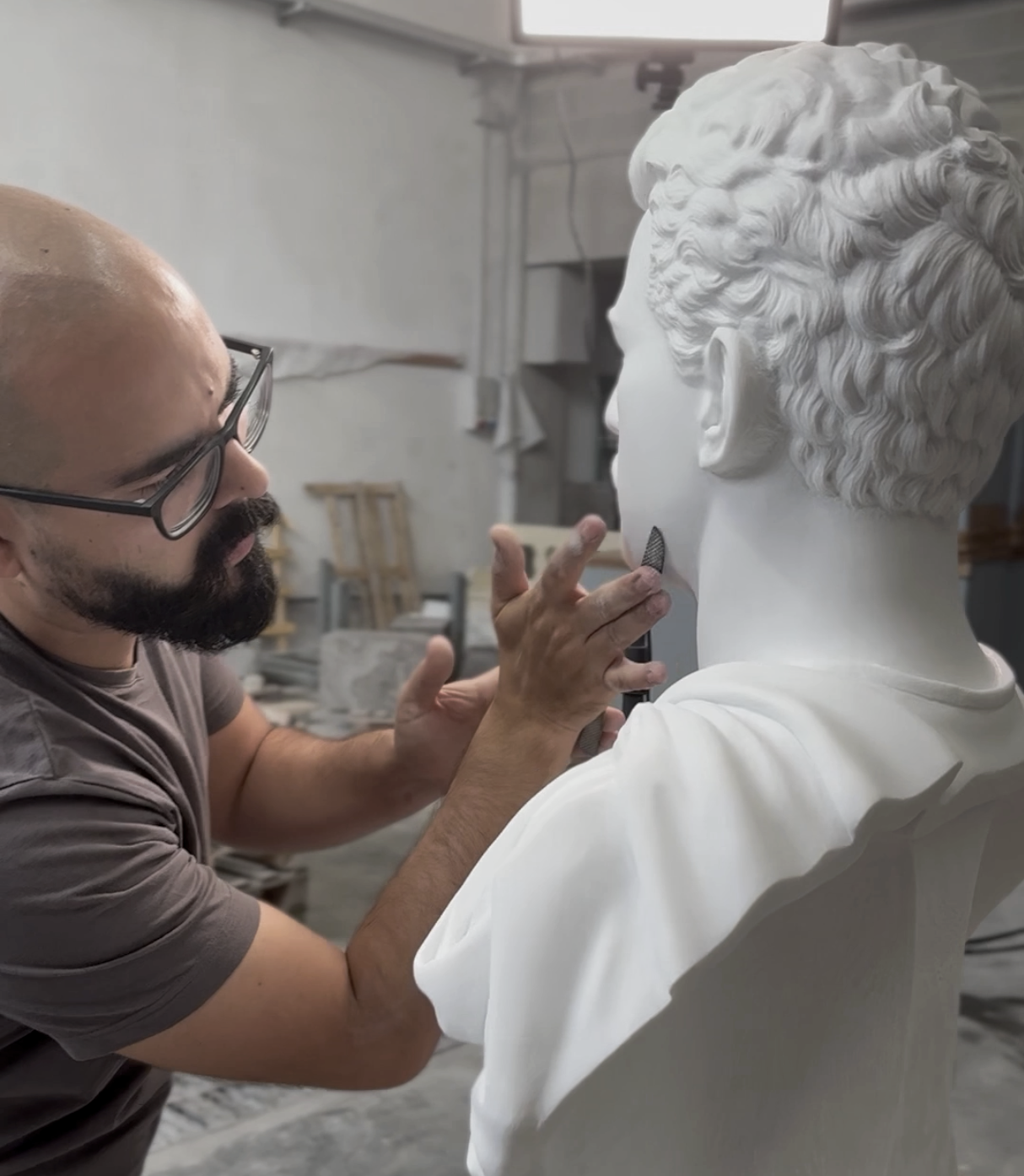
It’s the 22nd now, the day before their arrival. I’m nervous – a blissfully anxious and excited nausea spritz cocktail brewing in me. I felt again transported backward in time by this feeling. It was the same feeling of a young Gabriel, aged 9, when I was anxiously anticipating my first-quarter’s elementary school 3rd grade report card. It was an early October morning in the year 2000. I remember not being able to eat my income-driven free government-sponsored breakfast that day – how ungrateful. There he was, Mr. Fernandez, my “home room” (footnote: a form of attendance-taking period to make sure all the future productive members of society arrived on time) and science teacher said we would receive them by the end of period and that we were to get it signed by a parent or guardian by the end of the week. My stomach is in knots. My academic and potentially career fitness would be measured by a combination of letters and numbers in sequence. First, Grade: A-F (yes dear reader, back in my day we did have F’s for failure before sensitivity advocates changed them to E in some cases) then a number 1-3 to measure your effort. 1 being high-good effort, 2 meaning medium to low effort, and 3 you must have been mentally absent or asleep. Then there was Conduct, again A-F. On the A side meaning you’re likely to get along with others and follow orders and then the letters slide on a gradual decline to F meaning your chances of prison are very much nonzero.
Home Room: A (they only measured conduct)
Science: A1B (I talked a lot)
Physical Education: A1A ( I think the guy gave this to everyone, I barely did anything)
Music: A1A (if PE didn’t produce future athletes I don’t imagine this class gave us any Mozarts or Beyonces)
Social Studies: A1B (I engaged too much in the social part of the studies)
Art: A2A (I think the teacher was making a point that I wasn’t trying hard enough, perhaps this lesson stuck with me)
Mathematics: A1A (easy mode when the problem is clear, call me)
English/Reading – Mrs. Marquez….
The line that was corkscrewing my insides “What’s the big deal?” You might be thinking. “It’s just third grade, right?” True, however a few months before this day I was nearing the end of my first attempt at 3rd grade. Yes, you’re reading the words of a 3rd grade flunky. It was, to this day, one of the most indelible and vivid memories I carry from my childhood. Mrs. Marquez delivered the news to my mother that I would be repeating the year due to my inadequacy in class. I was uninterested. Distracted. Distracting. This was true; All I wanted to do was to draw in class. I drew pictures incessantly and when I was dissatisfied with my drawings I would crumple up the paper and hide it in my cubby. She would call me “Mr. Garbage” when she regularly made me clean out the litany of subpar drawings I hid away. She would ask why I did this: “They’re not good enough”, I would say. There she was, telling my mother: “He needs to repeat the grade.” My mother’s face, her tears and frustration, her sense of helplessness and the weight of responsibility were all painted in the shapes – highlights and shadows – of her face. Before I could estimate the appearance of ancestors long dead using their skulls, I could dissect my mother’s portrait and piece together the weight of this moment. I didn’t need statistically significant covariations and prediction models to feel her suffering. The evidence was clear, I had done this to her. I had shattered the future that was promised by her sacrifices. I stood there as the adults talked, feeling simultaneously like the object of my teacher’s ire and the reason for my mother’s pain.
“There is something wrong with him.” I remember her saying, in english, knowing my mother barely spoke it while she was fluent. My mother later in life relayed to me how frustrating it was that Mrs. Marquez – herself a Cuban woman – seemingly decided to make this moment purposefully difficult by choosing to almost exclusively speak English. As if to make the point clearer: your kind isn’t going to prosper here. “He doesn’t focus,” she went on. As I stand there in my shame, all I can do is look at her, and away, and back again. Not being able to stare into the fires burning her dreams for me before my eyes. We walked back to her light green minivan, its brightness contrasting the abyss of disappointment, anger, and sadness of our steps. The sliding door of the van closed. I watched her circle the prison cell of my shame, she got in and turned on the engine. I cannot remember the rest of that day.
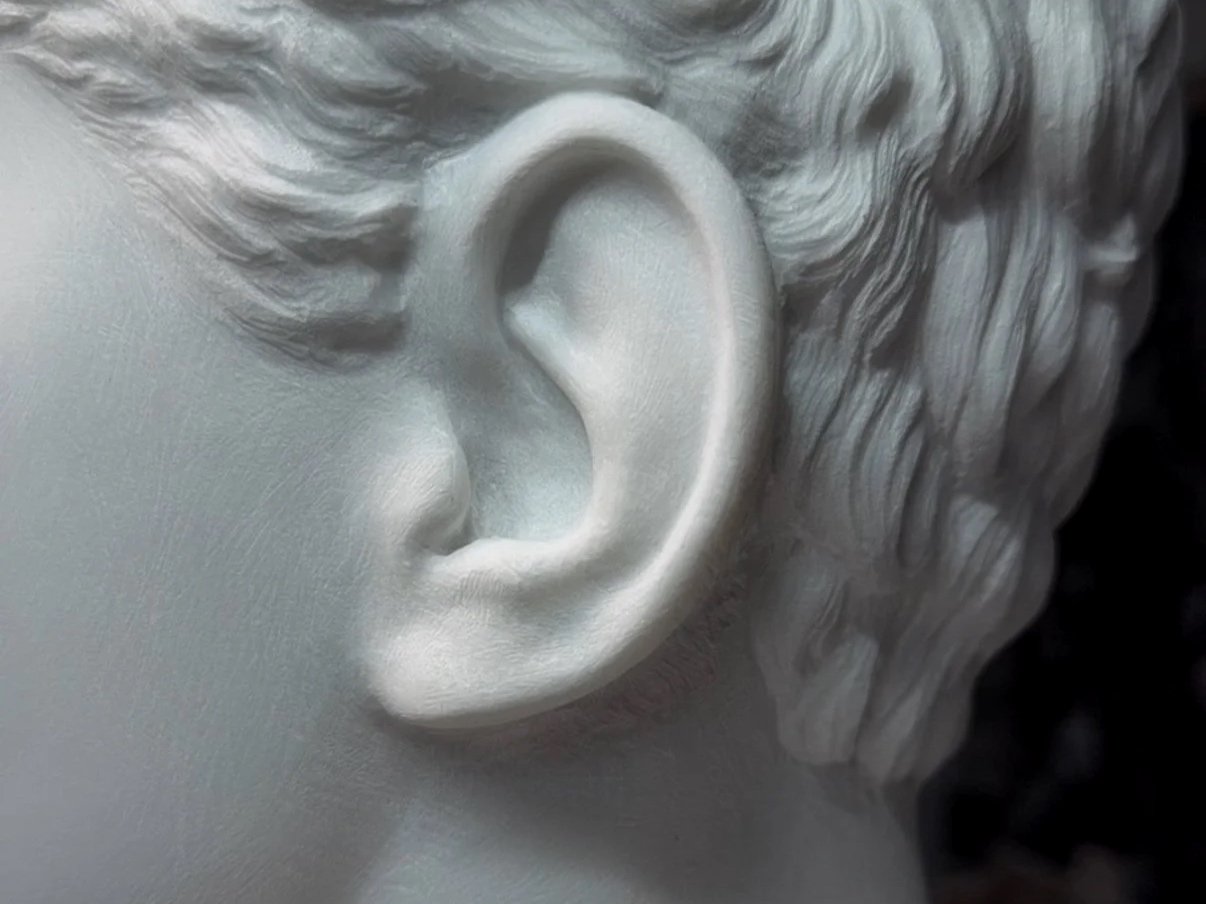
“There is something wrong with him.”
My memories of this time pick back up in that same minivan, this time en route to a hospital to see a psychologist. I wasn’t happy to be there; I remember feeling a sharp sense of being the subject in someone else's life. I wasn't looking and drawing this time. I was being observed, analyzed, and evaluated. This heightened self-consciousness is perhaps why I can’t even remember the face of the therapist. The first visit was the most difficult, I do remember the observing voice being patient even with unsuccessful questioning at the start. Perhaps having information about my troubles at school, he brought computer paper and a set of colored pencils. I seemed to have an easier time answering questions while drawing, so that’s what we did. Over the course of that summer I looked forward to my therapy visits. My mother claims I would complain to him about the chores my parents would make me do; painting a real Les Miserables scene when I did. How dramatic. As we talked he caught me crumpling up a drawing. He asked why I was doing that. “It’s not good enough, I can’t show this to my mom.” Me in a huff of embarrassment, he opened the apparent ball of shame to find an above average drawing for a 9 year old. I remember he tried to make me feel like it was very nice. I didn’t believe him, but I appreciated his effort.
My fondest memories were when we played board games where I seemed to exhibit competitive focus and a strong sense of rule following – Parcheesi, in particular. After losing my first game, I asked many questions to make sure I knew the rules. So that my little brain could strategize. Two pieces and I can block his passing. I would move two pieces evenly so that I could constantly keep them together and advance an attacking piece behind to swallow the trapped ones. I noticed that in a game of chance dictated by dice rolls, this was the only avenue in my control, which pieces to move at what time. He rolled a die and came up onto my barricade, thinking I wasn’t attentive, he jumped over my pieces and continued.
“He doesn’t focus.” - I could hear the echoes from weeks prior.
“You can’t do that, I said.” In hindsight, I think he cheated – not because it was his nature to do so – but in order to see how I would react. Given the rules he clearly laid out for me, he was unable to proceed; I took his piece on my next roll. Success. The sessions went on like this for a time, my Parcheesi skills strengthened; we talked, drew, played games, and discussed my interests. My mother came to pick me up on the day, that unbeknownst to me, would be my last session. I was told to wait in the room while she and the doctor talked. Instead of prescribing ADHD medications, my mother was instructed to go to the library and check-out books regarding the lives and works of artists and to read them with me to see if I could bridge the gap between my interests and my academic deficits. Instead of pharmacology stimulating my focus, we instead opted to aim my neurosis in a productive way. I think he felt I would get a sense of academic motivation by learning what it takes to be a great artist and that I may channel my competitive nature against them to move my piece forward in life. That summer I met Van Gogh, Mary Cassatt, and Michelangelo. I never forgot those books. Even now, my mind can picture the pages.
In the fall, the first day of school, during my homeroom period I receive my schedule. Glancing at the list, my eyes passing through the squares on the spreadsheet like my Parcheesi pieces, they land on “English – Mrs. Marquez.” Aside from the advice to blend literature with art to get me reading, I think I honed a sense of competition that summer. The therapist rewarded my competitive drives so long as I played by the rules. I read her name again: Mrs. Marquez. I looked at it like an opposing piece that was simply in the way. That afternoon, my mother picks me up, in the same mini van, and I hand her the schedule. She panics, and starts assuring me not to worry and that “we can enroll you in a different school.” I remember her face, the light beige interior of the vehicle, and remember saying “no, I’ll show her that I can do it.”
And I did: English/Reading – Mrs. Marquez – A1B.
I was still disruptive, hard to reel in, but I did all that was required. Not because I needed to pass the class, but because no one would ever make fun of my accent again. No one would ever call me slow or garbage. And I would never put my mother in that position again. As such, school became a game to me, so long as I kept my grades above an acceptable threshold with proportional effort, I would be free to draw to my heart’s content. I strategized to maximize my drawing time, I even asked a teacher once to tell me when the grading for each 9 week period would close so I knew how many assignments I could take a zero on and still make an A. I know, I was a nightmare to them, but not to my mother.
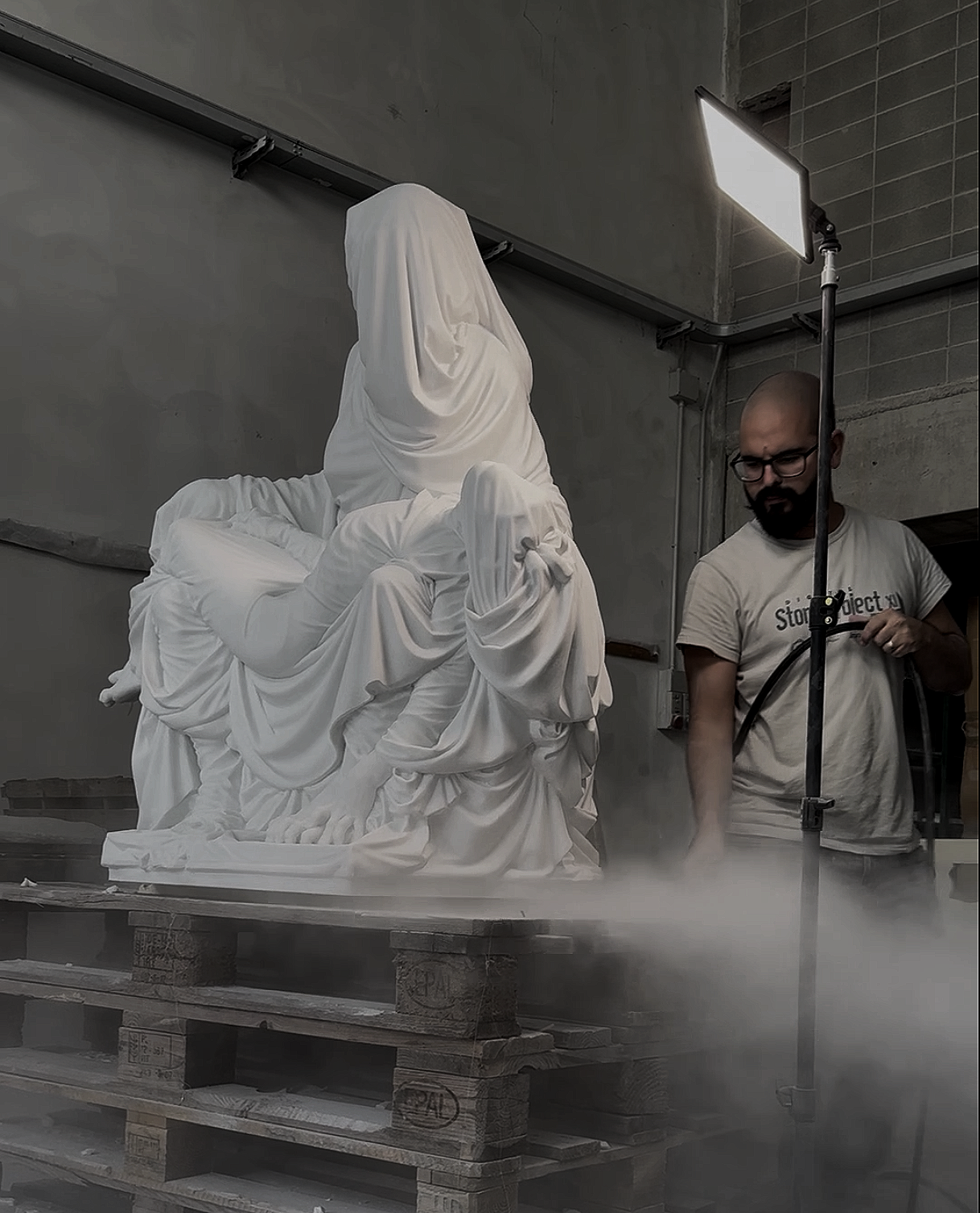
We now find ourselves back on this mountainside in Italy, where my parents would arrive the following morning and I would be graded again. It is the last work session before they arrive and as I carve I wondered how I might measure up. My wife asked in bewilderment why I was nervous about their arrival. Perhaps after reading this she might come to see that their approval has always been an ever-present weight on my shoulders. Like Sisyphus, I’ve been carrying this particular stone for some time. Rest assured that it isn’t heavy, that much I can promise. It is the weight that a little boy once had to carry all those years ago, how heavy could it be for me now? Yet somehow as I write these words it’s weight amplifies. I’ve been here before, many times, anxiously anticipating a release of some sort that will make all this toil and effort finally “be enough”. That a sufficient enough achievement could repay their hard work and sacrifices. That I could win this game of sculptural Parcheesi, and they’ll have known I’ve won. As if that could quell the tireless chase for artistic excellence that would justify my short moment of life on this planet. Here, tonight, the absurd finds me where I didn’t expect it. My very work, tied to a semi-conscious insistence that it might somehow allow me to be more than I am. If I could make something great enough, maybe someday I could be the subject of a children’s book that another child’s mother reads aloud at bedtime. These thoughts are only the appeals of a mere mortal, whose shoulders are now dusted white with achievement, still unable to come to full grips with his own mortality and the fleeting nature of his existence. I smile and show myself a little grace for my foolishness. I gaze at the eyes of the sculpture, perhaps with the eyes of the child I once was, still am. The thought of crumpling it up and stashing it in my desk cubby came to mind. Instead, I nod, “Buena esa, Chama.” – “Good job, kid.”
They arrived. My wife and I led them into the warehouse where they would see the in-progress would-be magnum opus of their grade-school flunky, Mr. Garbage. As they gazed at the shrouded mother, I walked to a covered shape nearby and pulled its veil. My mother shed tears. Andres, the subject of the work, felt seen. Perhaps maybe he felt the feeling I wanted; that his life mattered. In his smile, his excitement, and his insistence that “he was now famous”, I felt the weight of my existence lessen. I sculpted a love letter to a man who showed me how to love. I had brought tears to my mother’s eyes again. This time, I didn't want to look away.
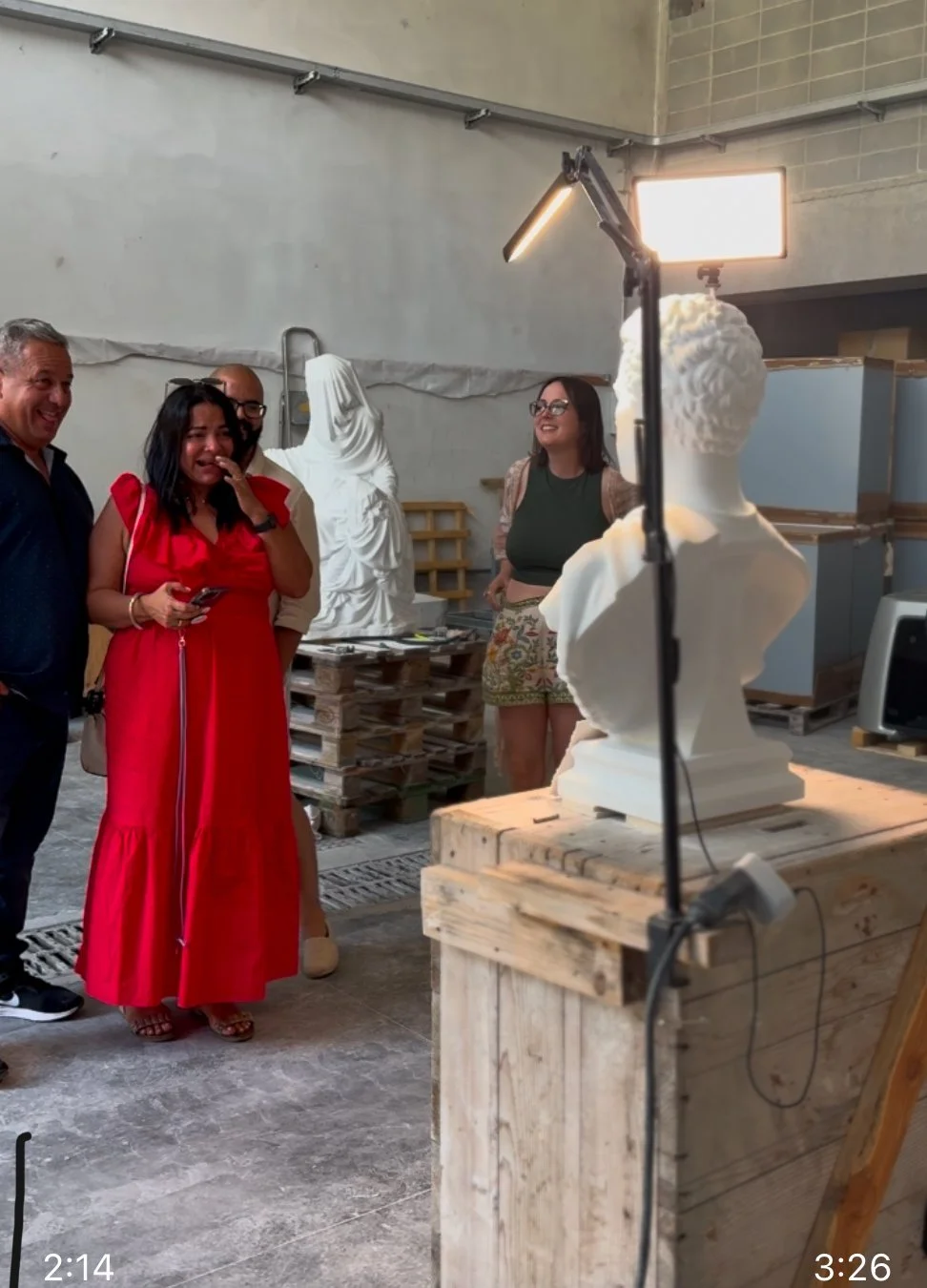
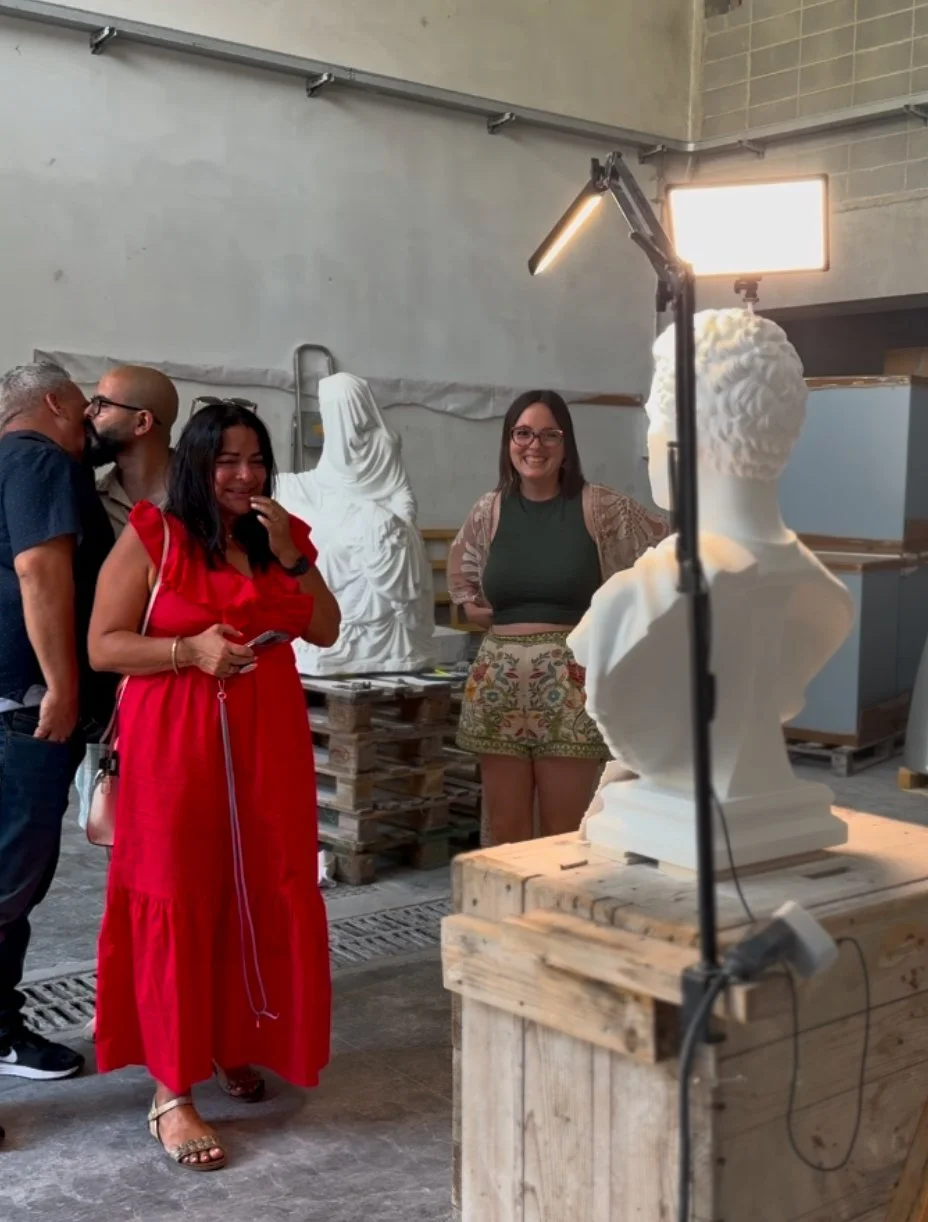
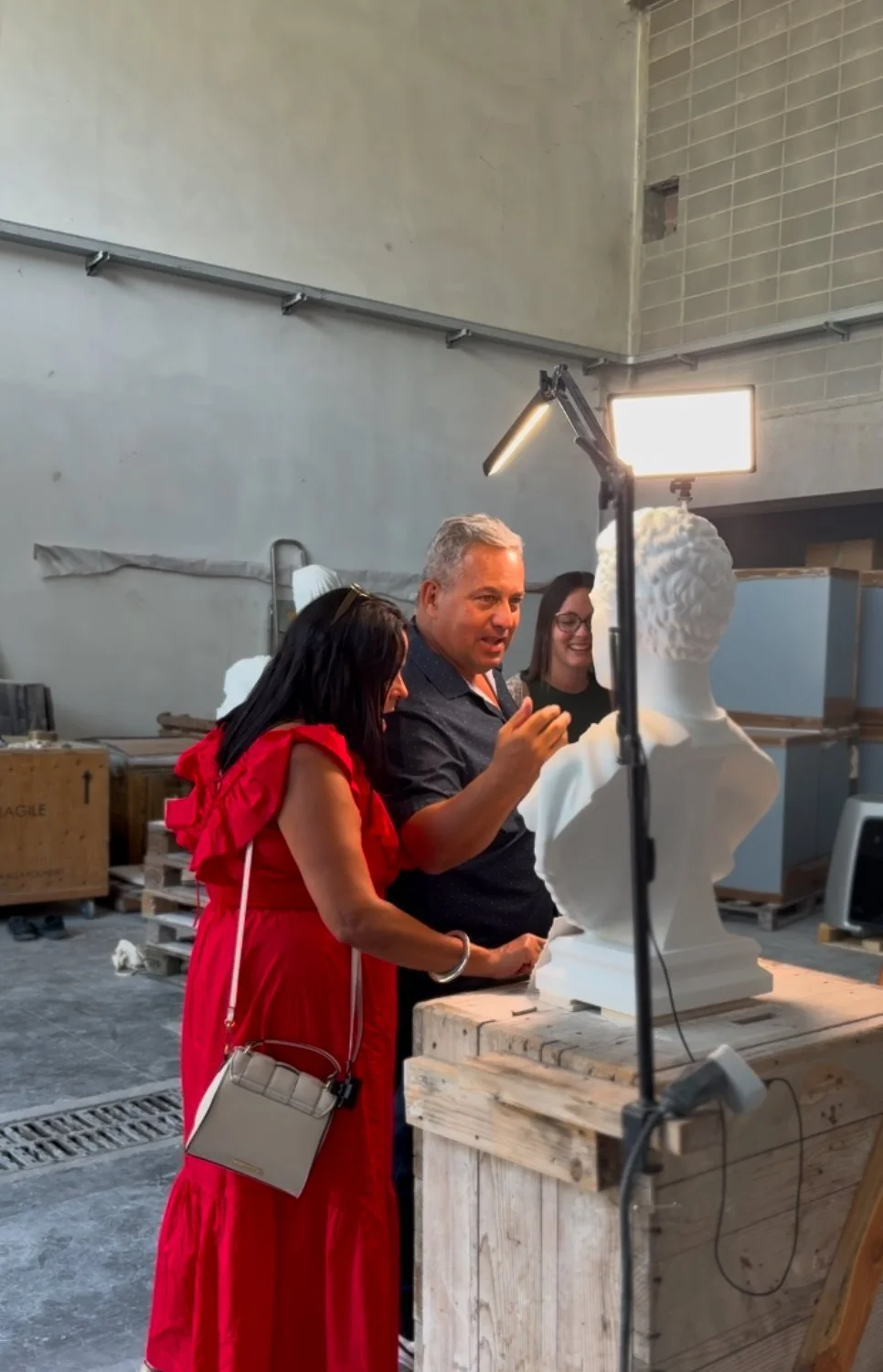
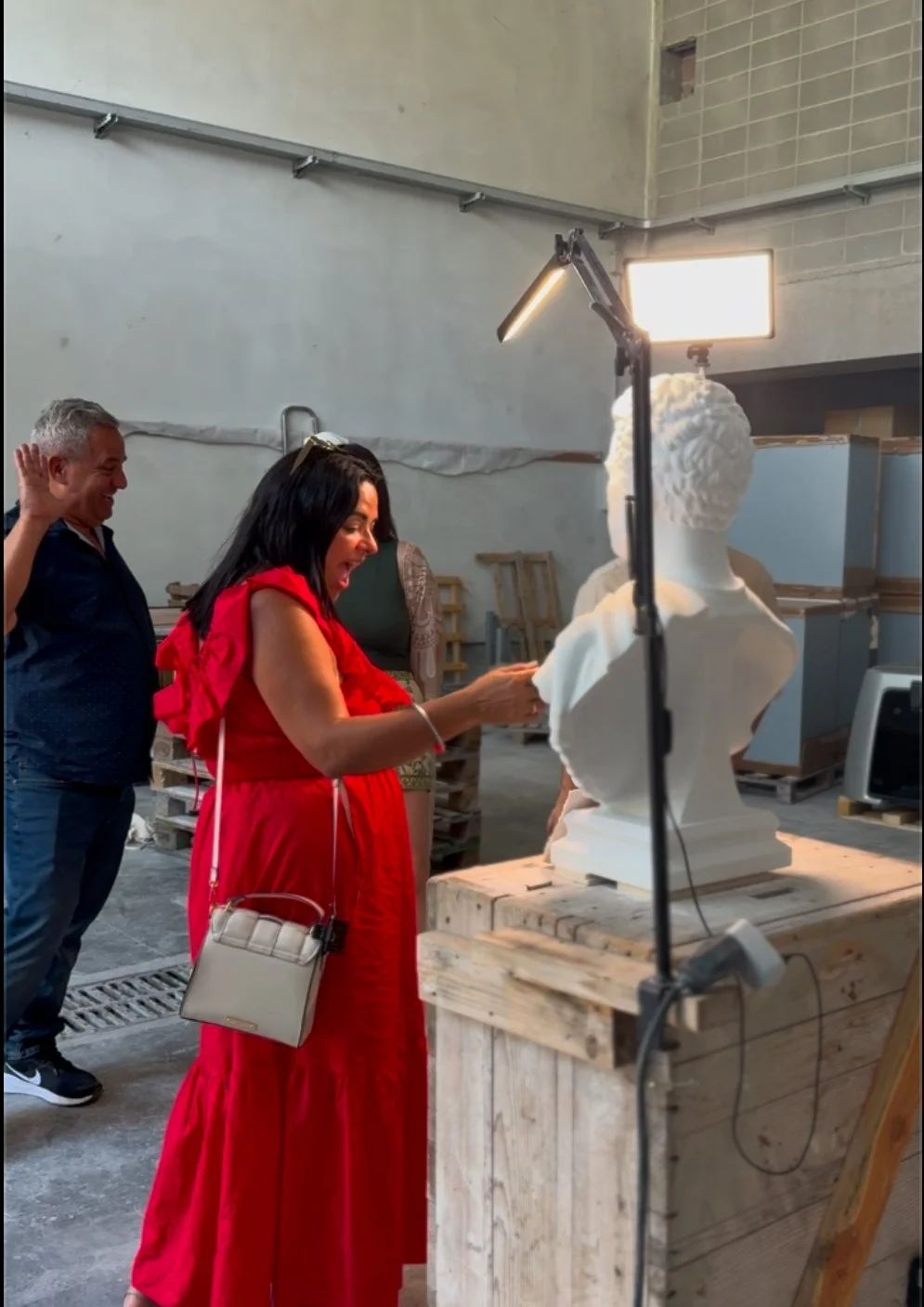
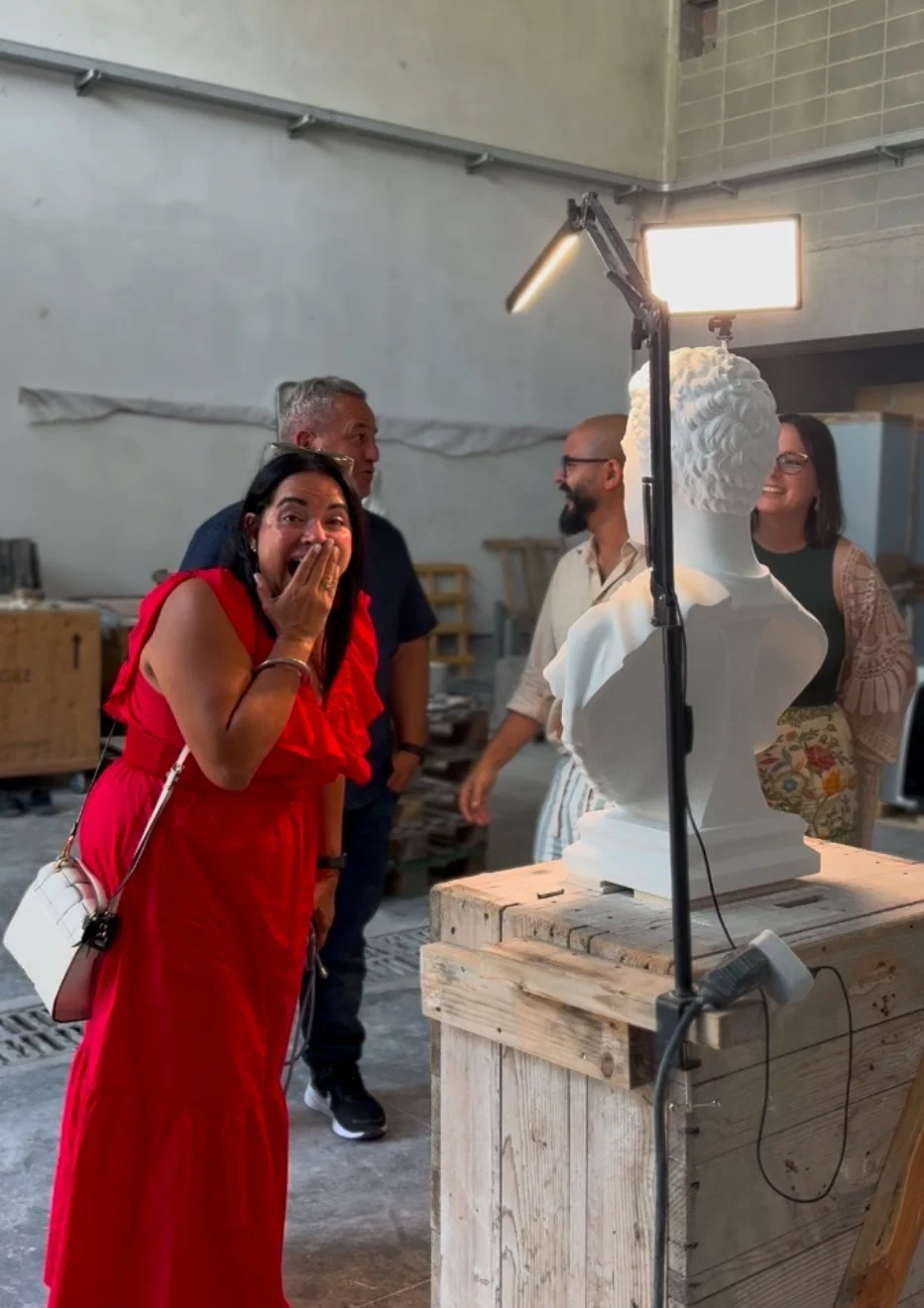
This was not my work alone. I am not my own achievement. So I had them finish it with me. I was in the room with people who sometimes believe more in my own dreams than I do. As they added the textures to the bust’s interior hollow places, each taking turns, the weight of the stone lessened. I could feel my shoulders resting, this did not free me of my struggle with the absurd, but it revealed another appeal for me to burn away. I could sculpt 100 statues and erect 10 cathedrals, and my sense of debt to them, my love for my wife, my mother, my father, and sister, would not be paid. It would come up short. But that sense of debt is the appeal. A “reason” to make, instead of making in order to be active witnesses in their lives.
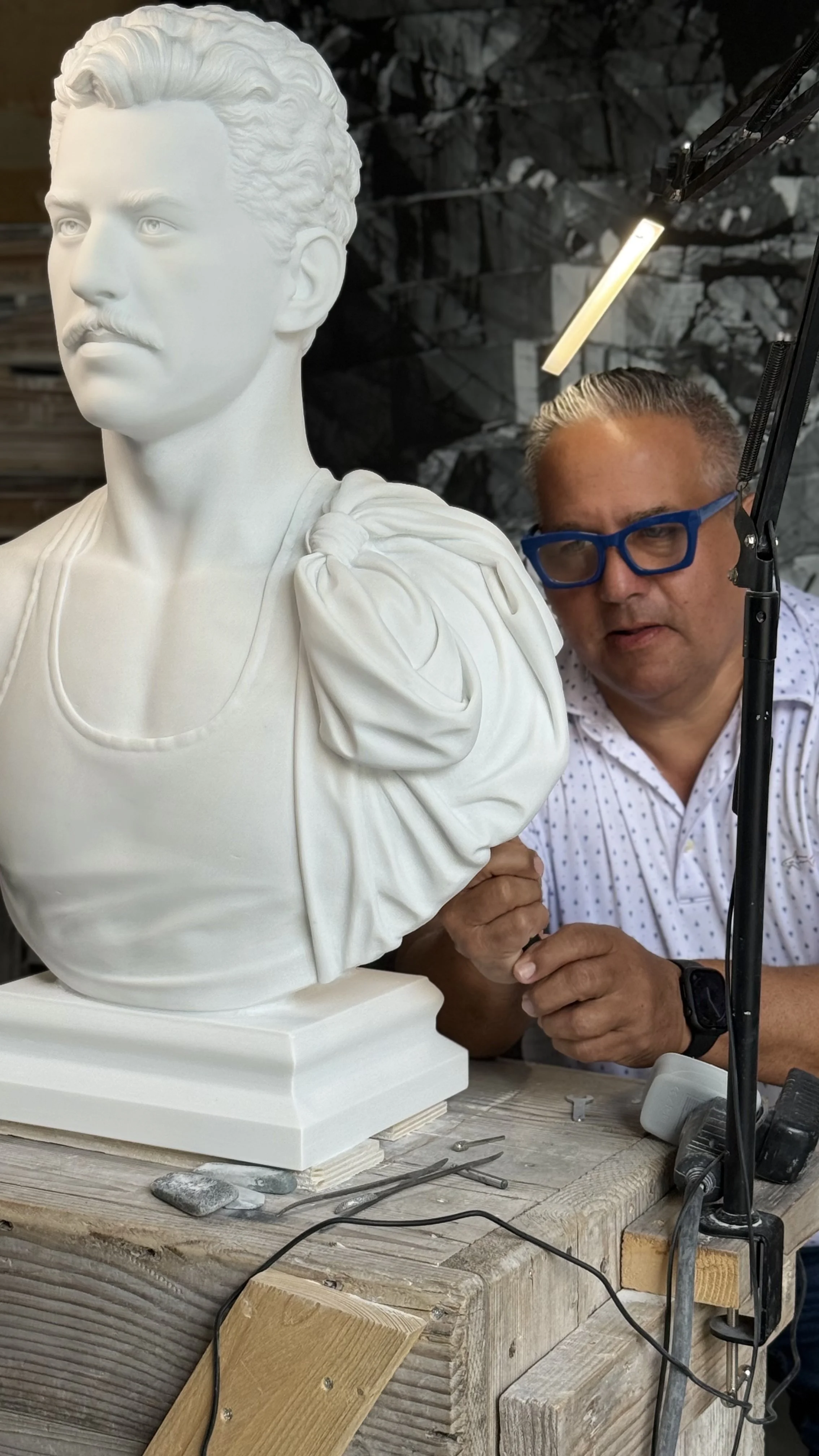
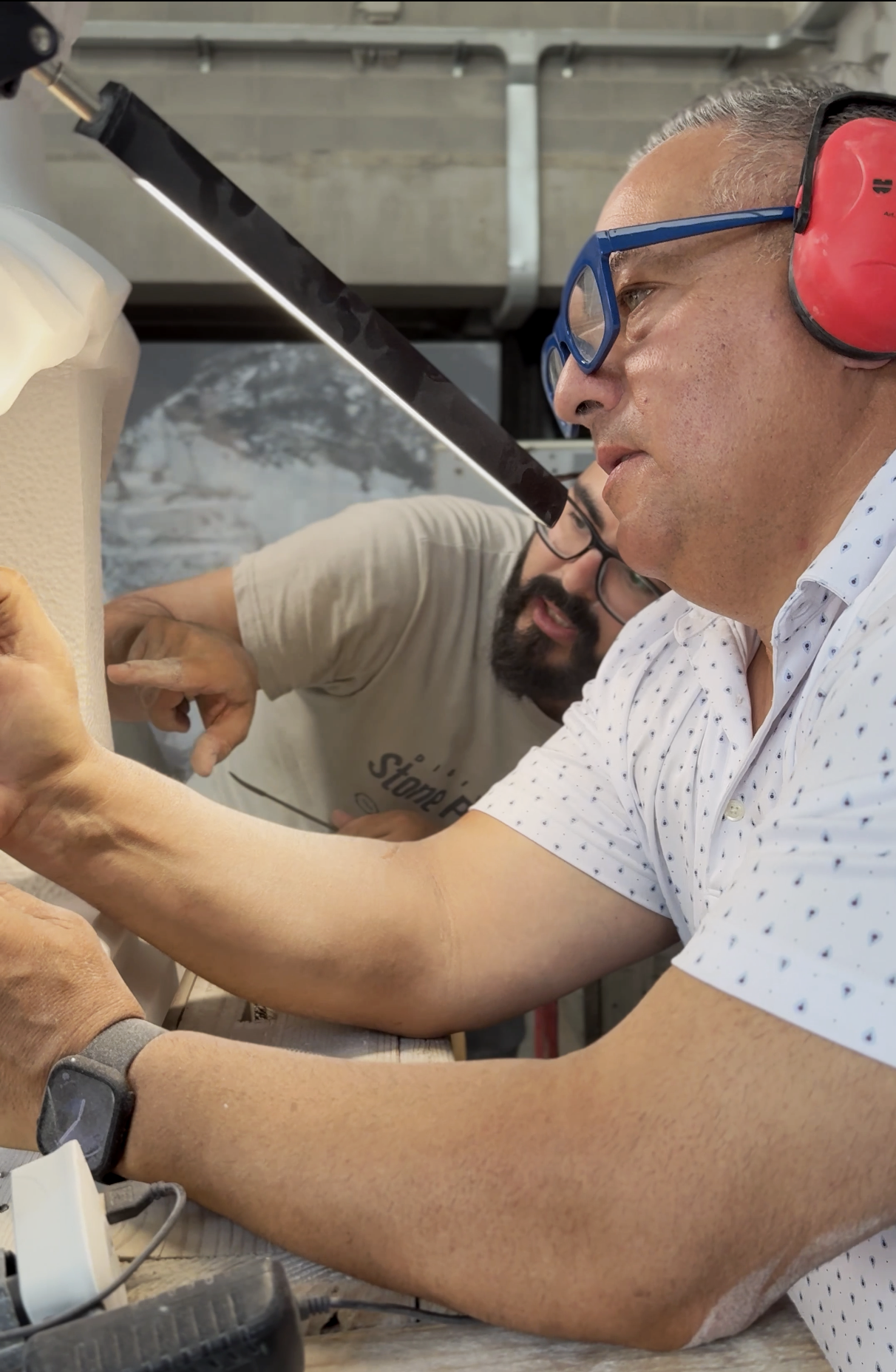
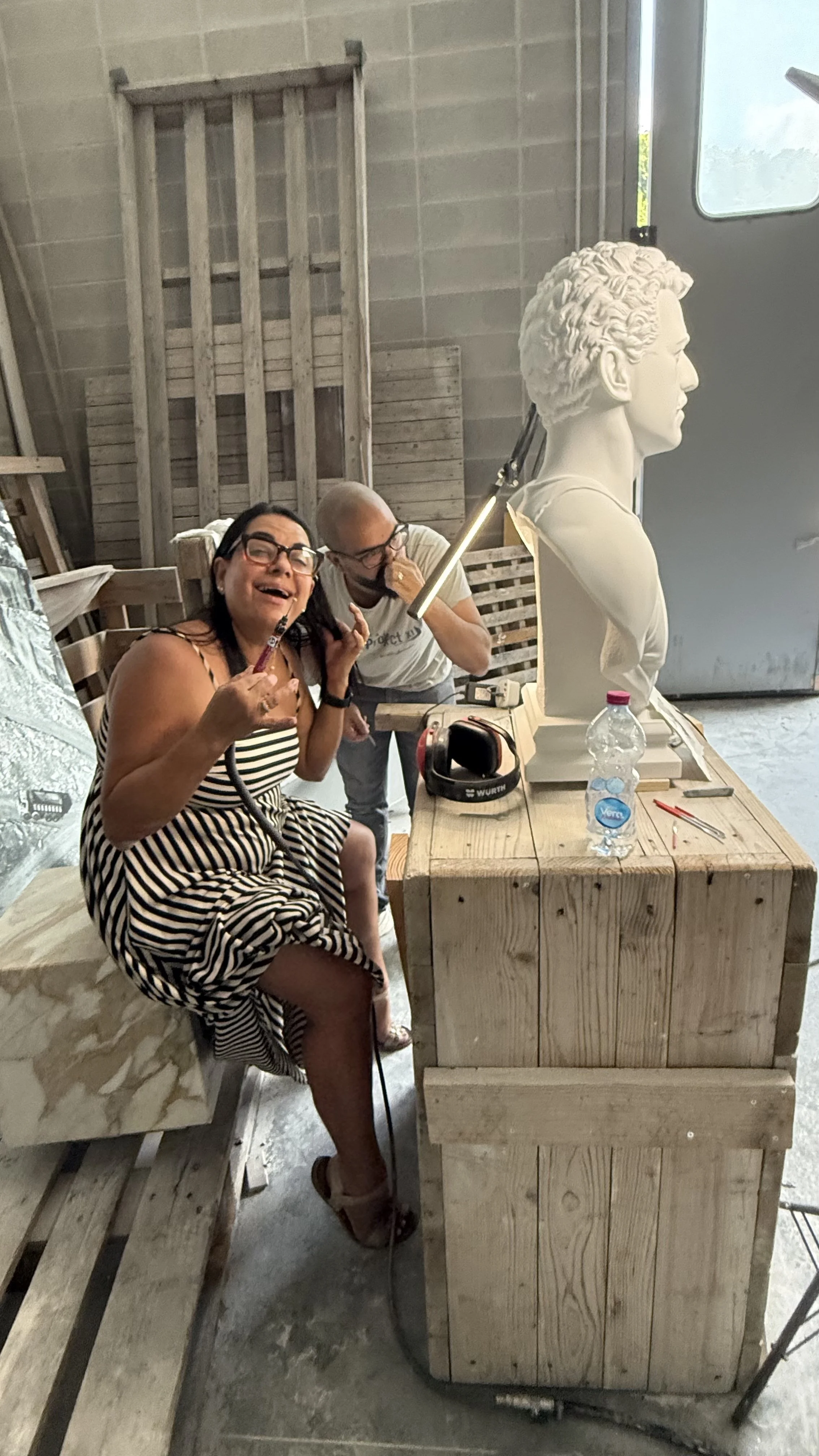
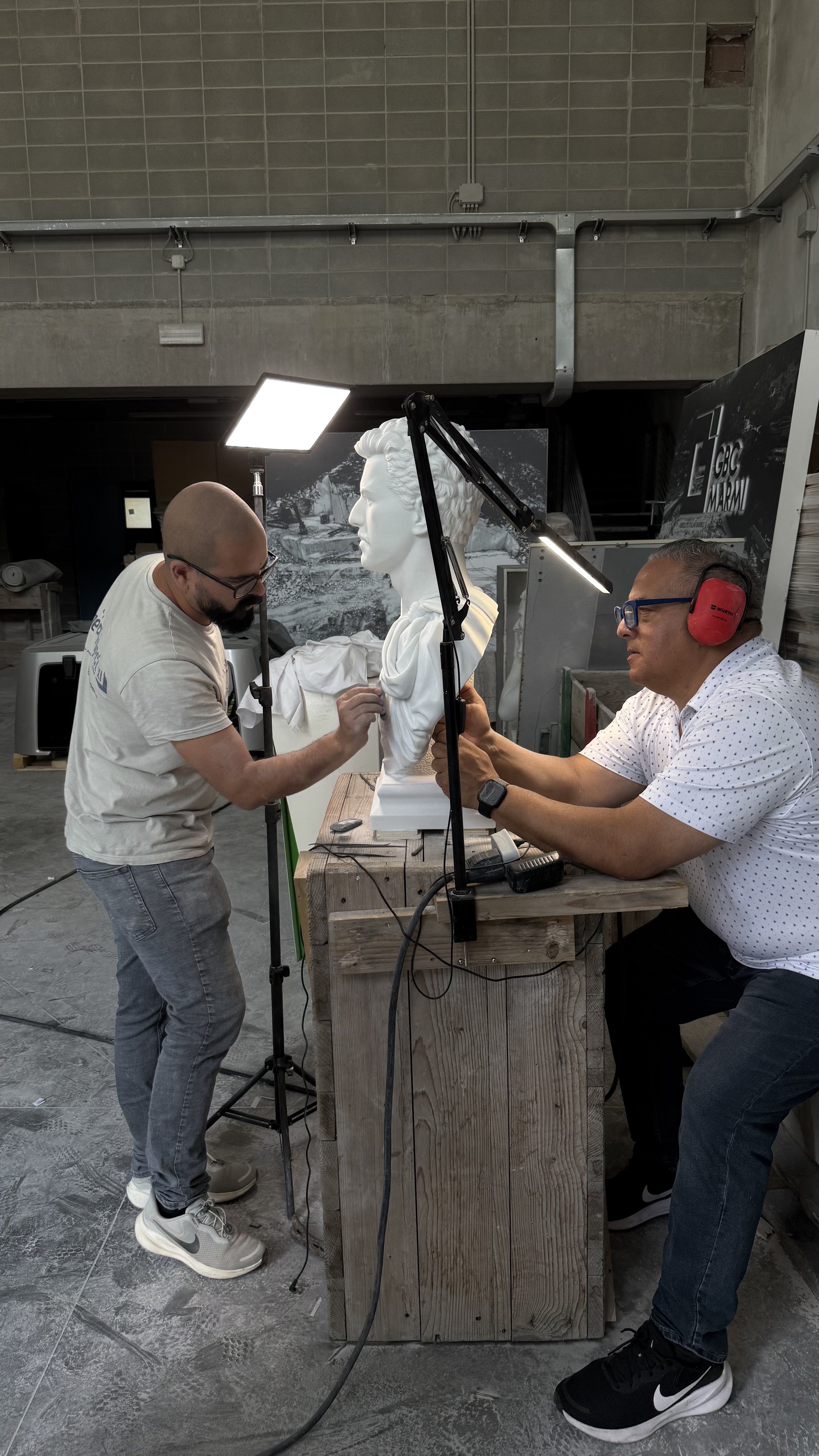
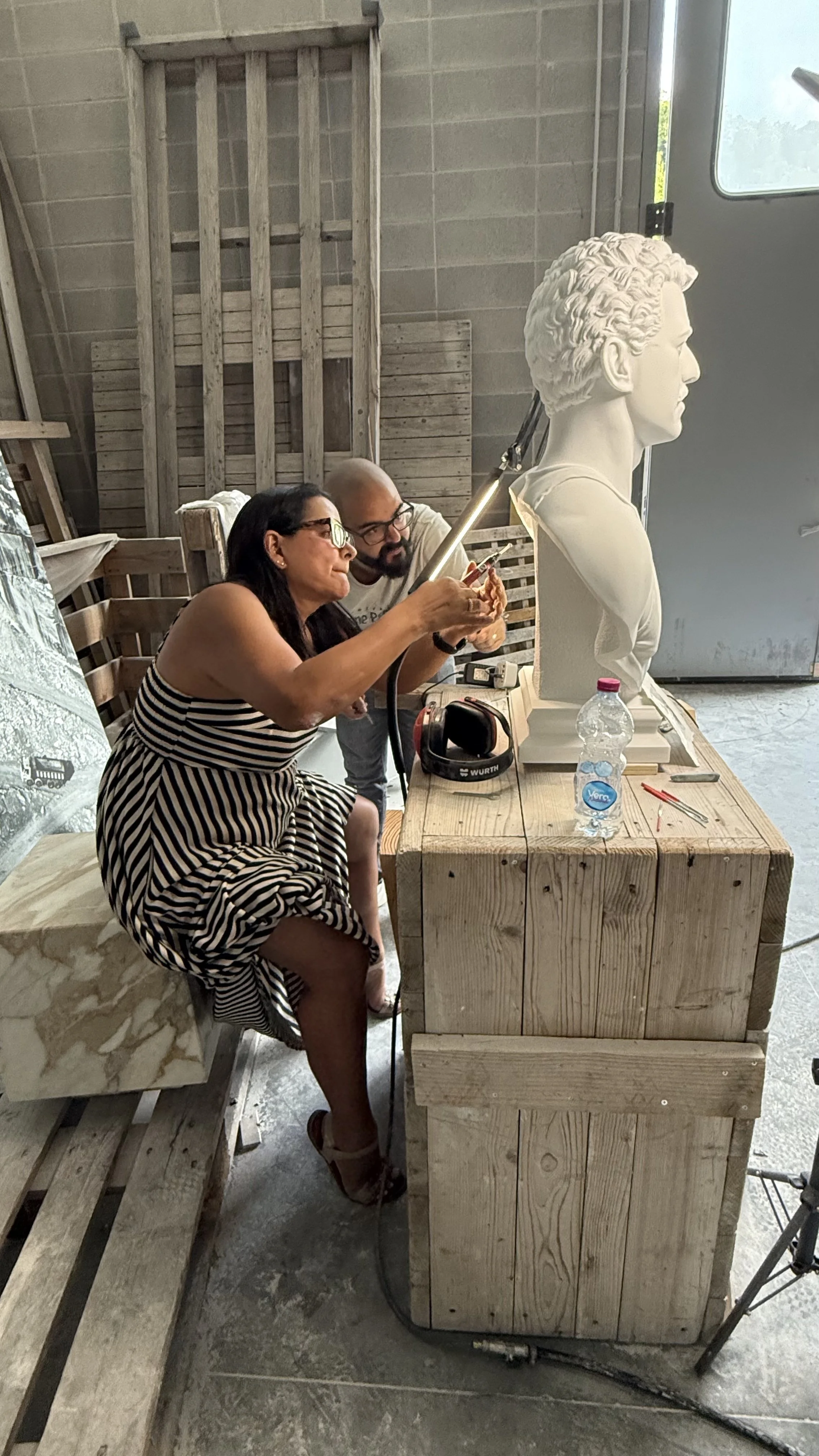
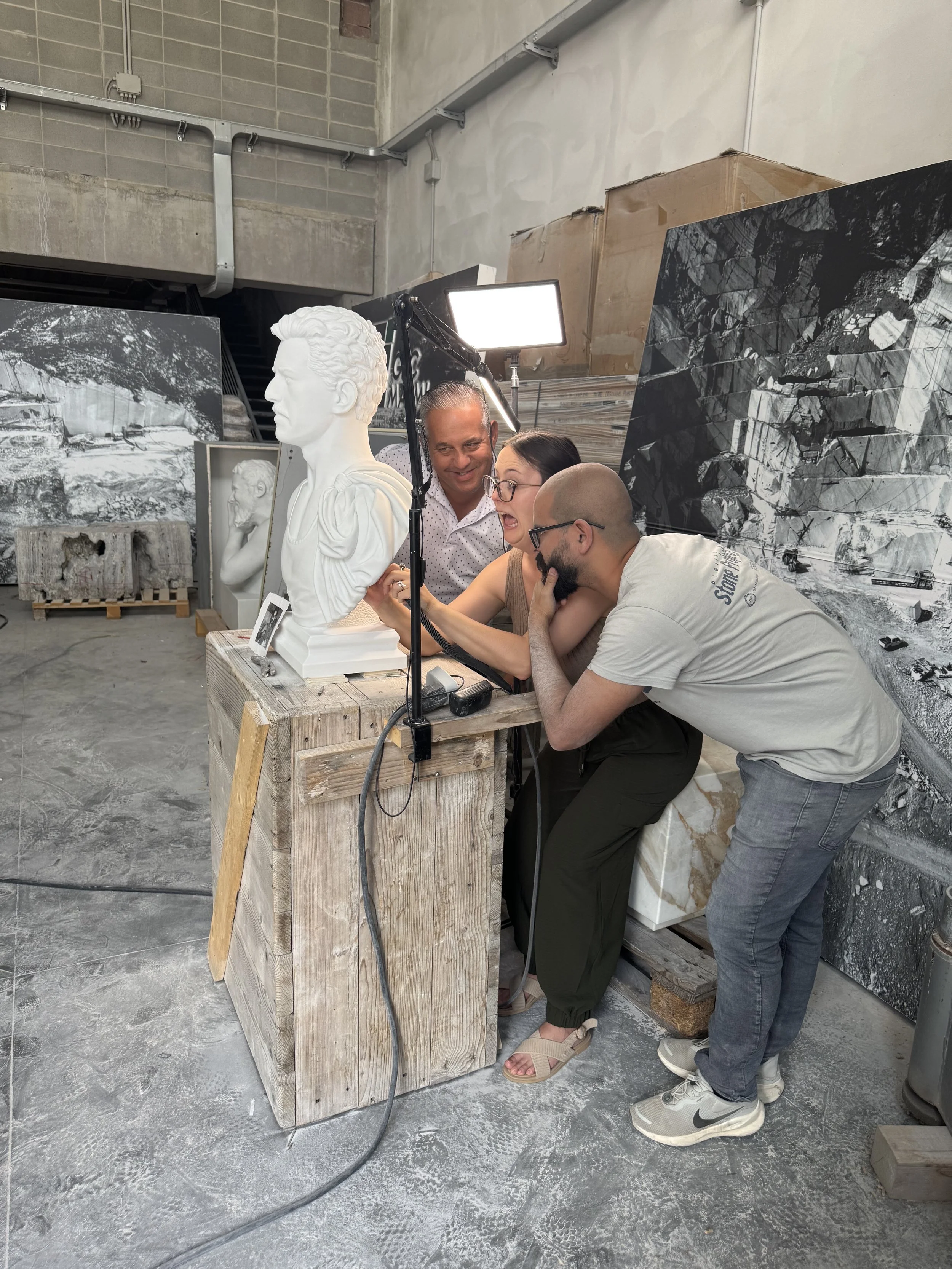
As we worked, marble dust rose and settled onto our skin. My wife, my mother, my father – each of them left their mark on the bust, their fingertips softening the stone in places I had left raw. I looked at their hands, pale with dust, and thought of a year prior, when I had written of the Pietà: how the whiteness of stone makes my own white-passing skin look more like my mother’s, her father’s, and his father before that. How it recalled the contrast of her hands bent against porcelain toilets she once scrubbed to feed us.
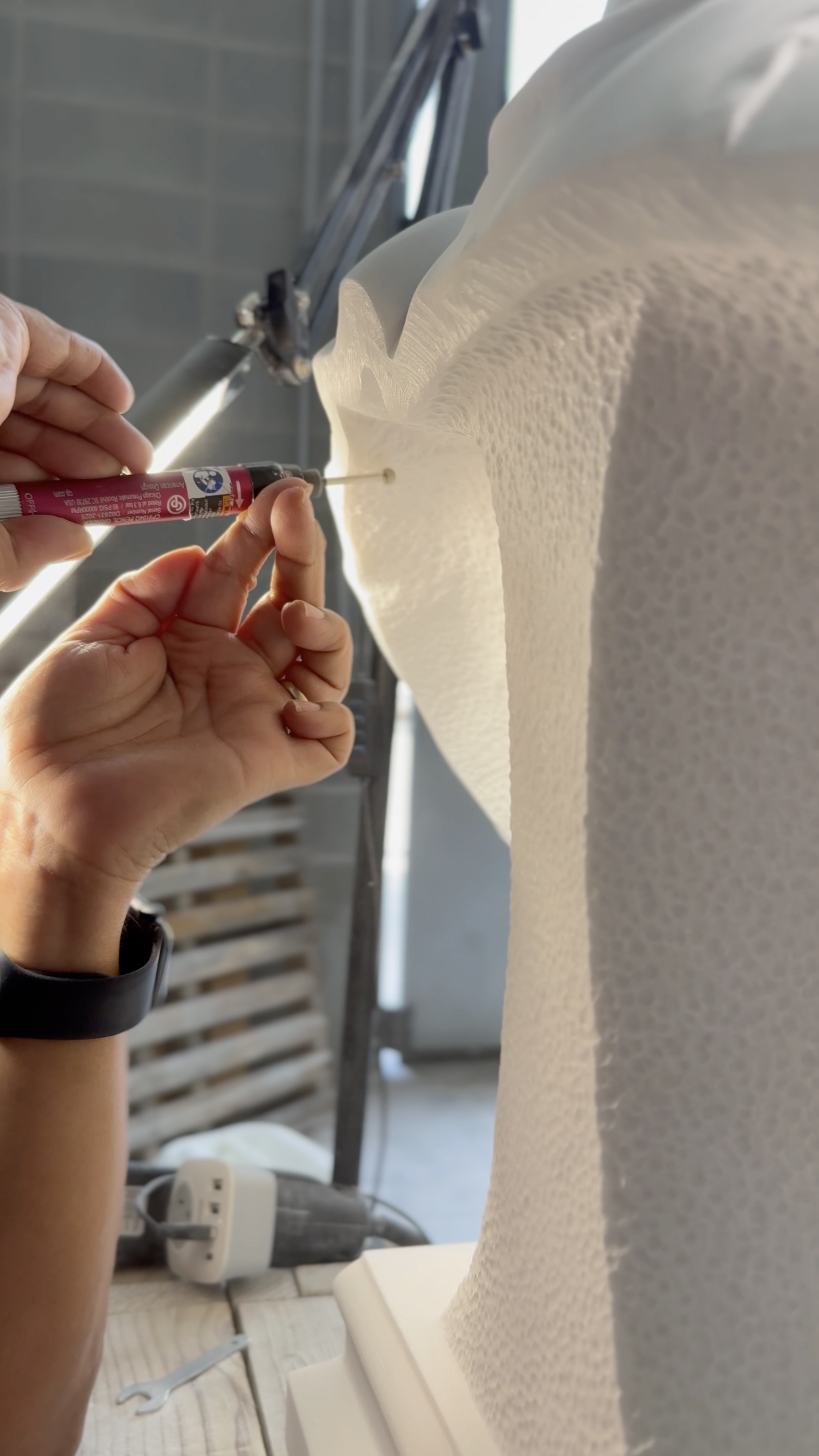
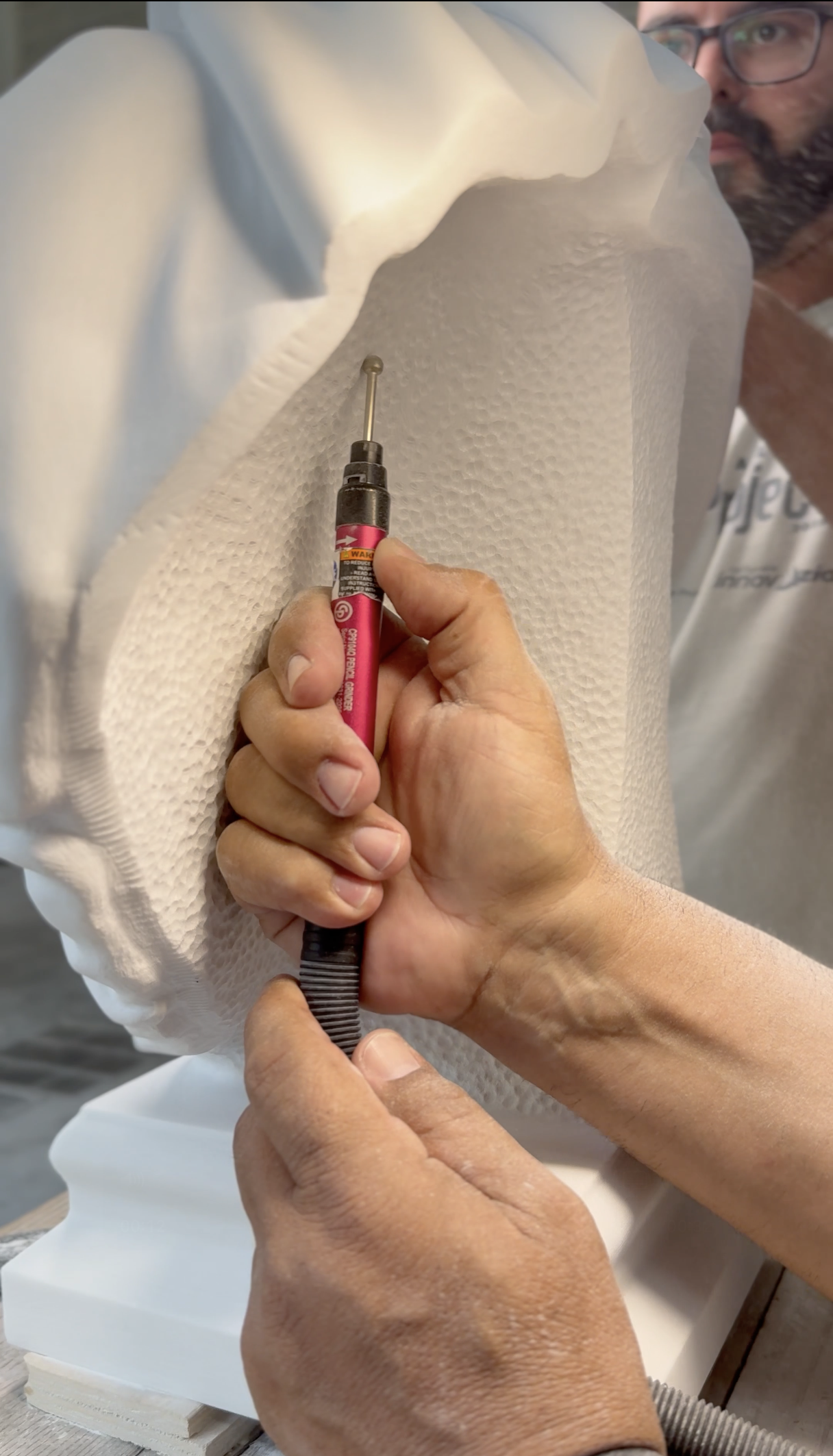
Now those hands were here, covered not in bleach and soap scrubbing the waste of others but in marble powder polishing the surface of artwork, tending not to the labor of survival but to the shaping of a likeness, a gift. The whiteness of the stone met the brownness beneath, each gesture revealing a history of work that had carried me here.
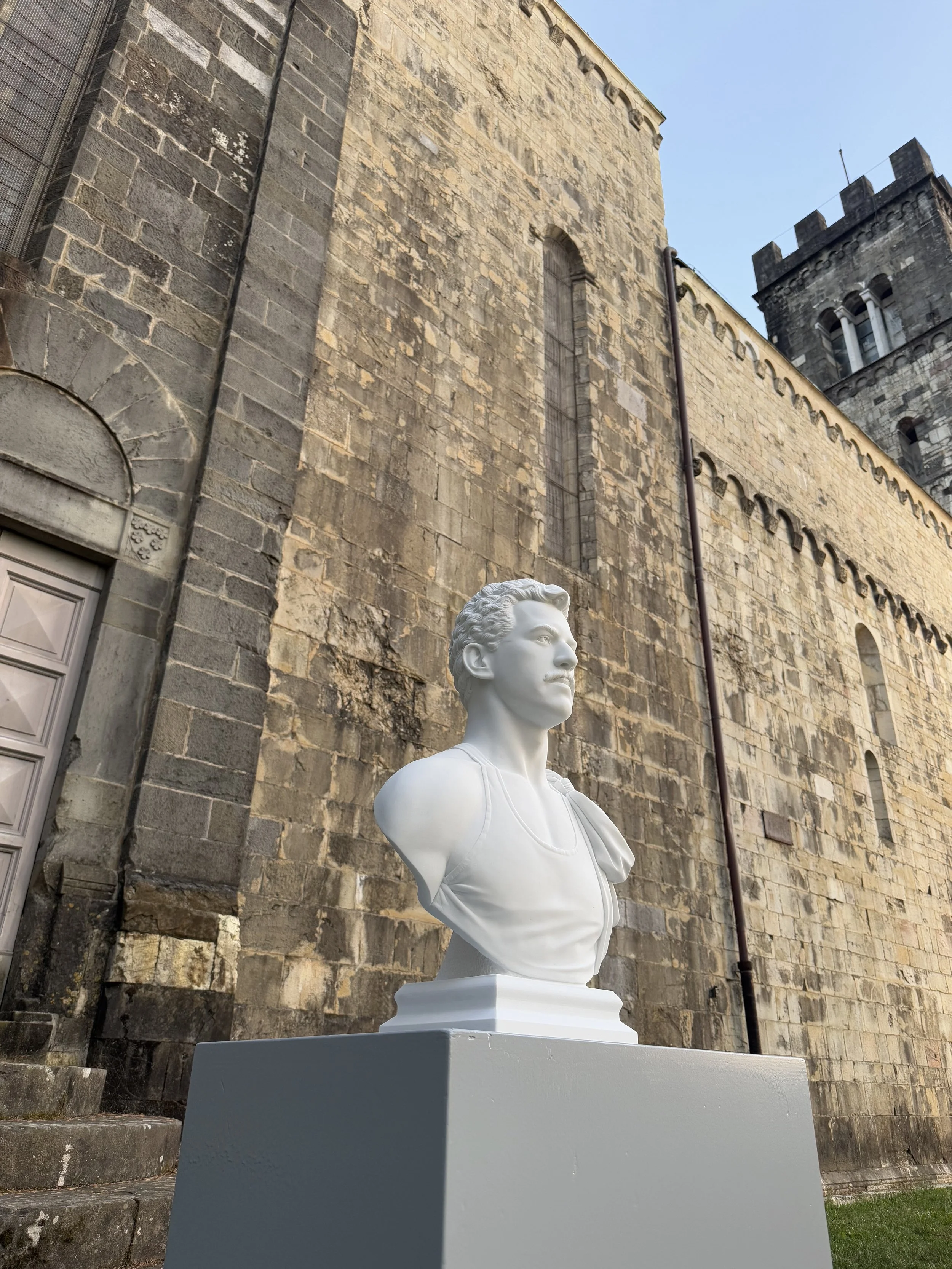
I smiled. I felt the weight of the stone ease, not because it had grown lighter, but because I was no longer carrying it alone. The bust stood finished, not by me, but by us.